This page assumes that you already know what Key Signatures are, and how, when and why you'd use them.
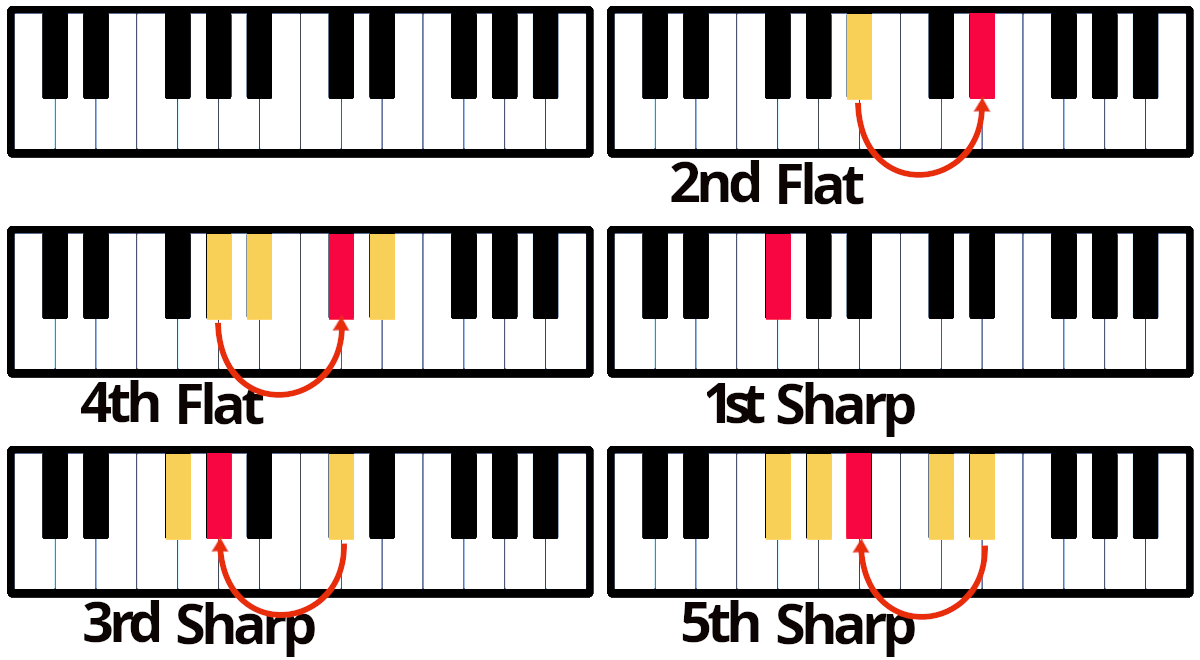
The pattern to memorize is...
B E A D + G C F + B♭ E♭ A♭ D♭ + G♭/F♯
All you need to memorize is B E A D
Easy.
The best way to think about Modes
is in order of brightest to darkest...
  4  Lydian      #4
  1  Ionian
  5  Mixolydian  b7
  2  Dorian      b7  b3
  6  Aeolian     b7  b3  b6
  3  Phrygian    b7  b3  b6  b2
  7  Locrian     b7  b3  b6  b2  b5
There's no point in modifying the 1st or the 4th.
Note, how there's ONE simple pattern, all you need to remember is...
as the scale gets Darker it goes..
b7 + b3 + b6 + b2 + b5
Now, interestingly, that is just changing the number of accidentals.
The relative minor is the Aeolian mode, 3 Flats.
So the key signature for relative minor is shifted by 3 flats,
and the relative major is shifted by 3 sharps.
ie,
the key signature for the relative minor of C (0 accidentals) is 3 flats.
the key signature for the relative minor of B (5 Sharps) is 2 sharps.
the key signature for the relative minor of F (1 Flat) is 4 flats.
etc
Therefore....
All Modes are just shifting how many accidentals you're playing,
at that particular time, which is how Dark you want that bit to sound.
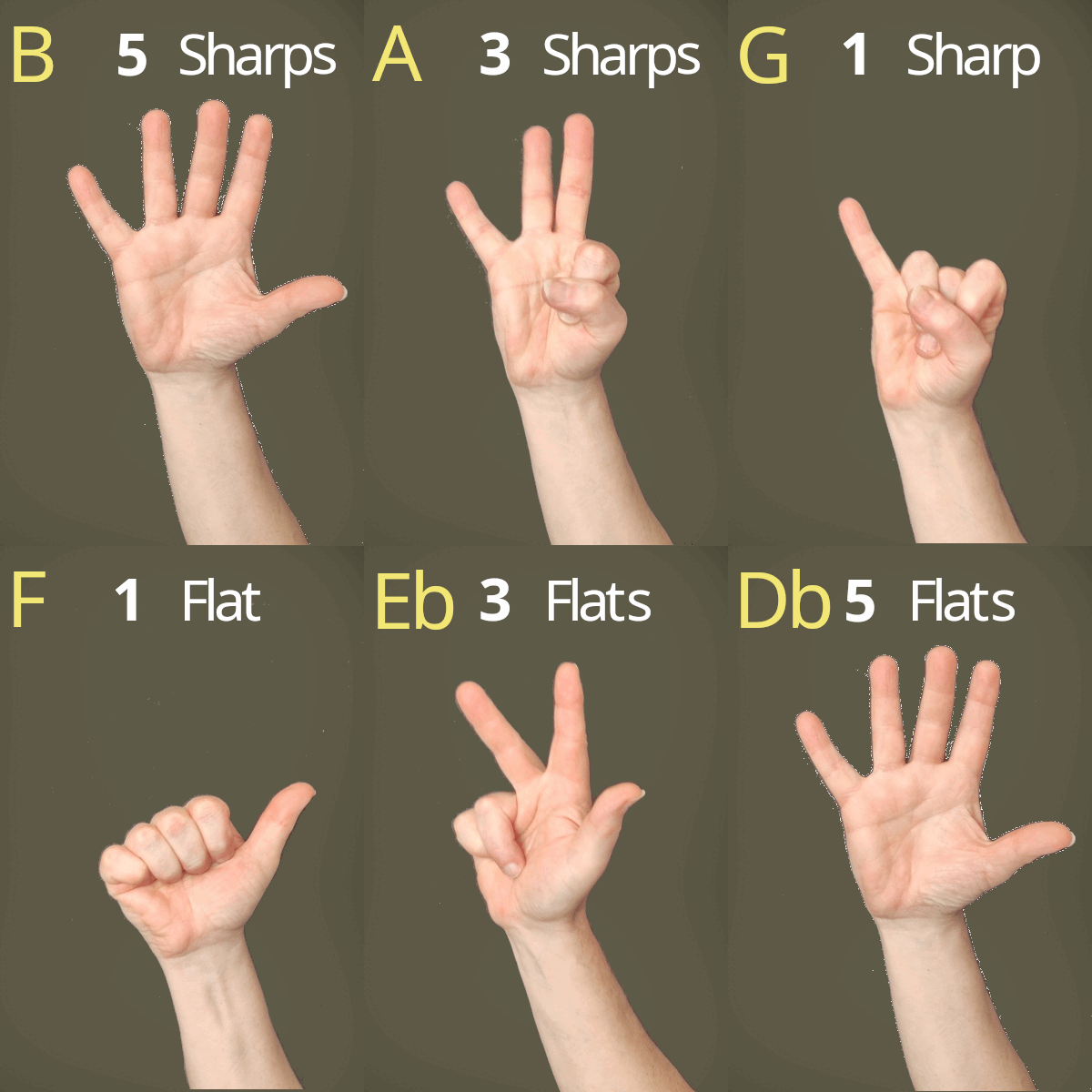
If you know the key, you use the Hand trick to find out how many accidentals (flats or sharps) you're dealing with.
Then you use the Keyboard trick to find out which accidentals to actually play.
To Find the Key from the Key Signature, just count.
Easy!
| ⟵ Fifths | Fourths ⟶ | ||||||||||||
| Key | F♯ | B | E | A | D | G | C | F | B♭ | E♭ | A♭ | D♭ | G♭ |
| Sig | E♯ | A♯ | D♯ | G♯ | C♯ | F♯ | - | B♭ | E♭ | A♭ | D♭ | G♭ | C♭ |
Compare with...
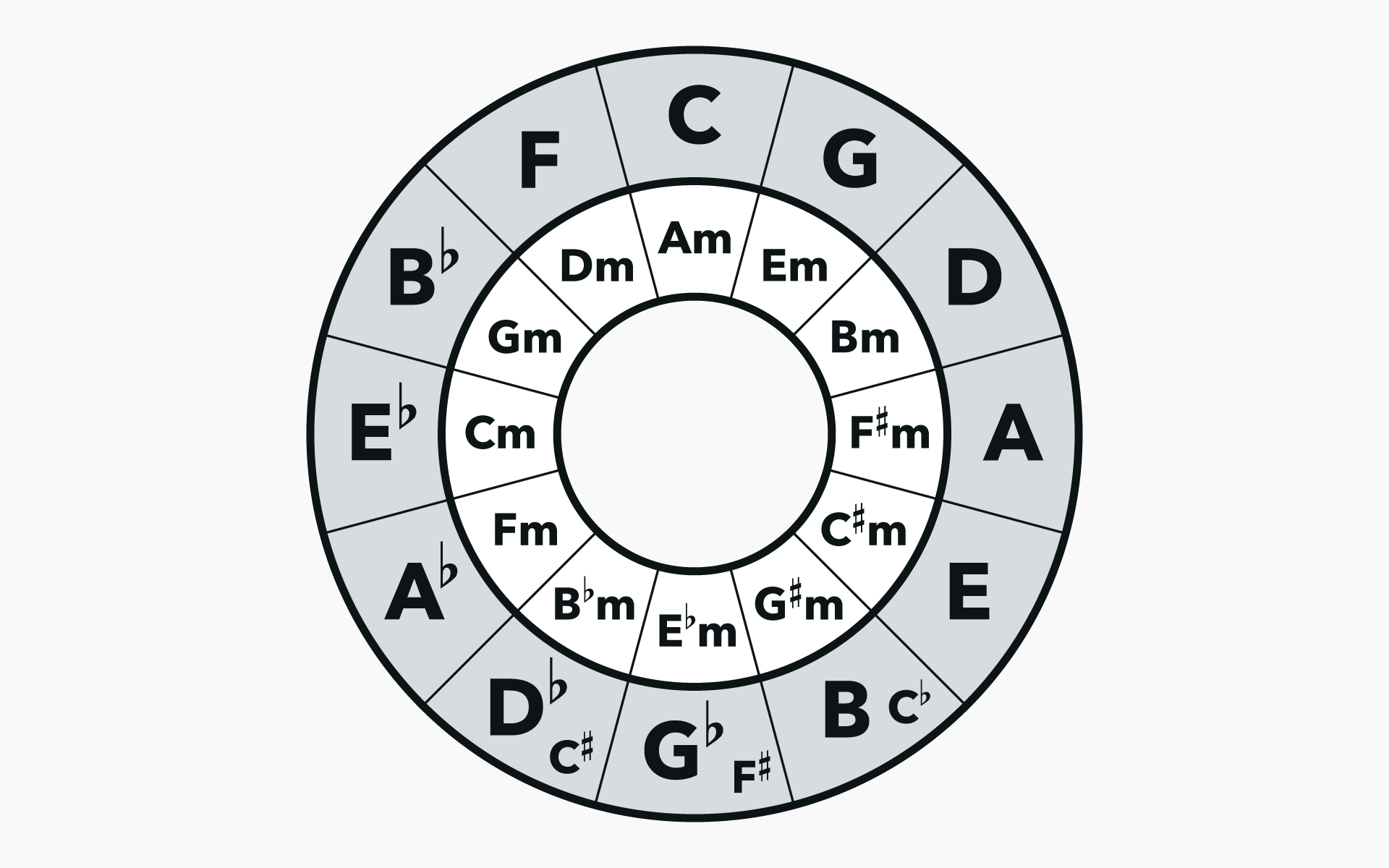
However I do strongly recommend making your own circle of fifths out of 3 cardboard circles
(Trivial if you have a compass and protractor - but fairly easy otherwise)
joined by a Brass Fastener (aka Butterfly Clip, Brad, Paper Fastener or Split Pin)
... make one and chuck it in your guitar bag.
One side has 2 rings of the circle of fifths (of different diameters) which is very useful for Transposition.
The flipside has a circle of fifths on one ring, and the interval numbers on the other ring, useful for studying Music Theory.
There is an interesting reason for all this....
The Circle of Fifths is WRONG!
(from a pedagogical perspective)
If you lookup up articles and pictures of the Circle of Fifths
you'll see that they make it way too complicated,
and also the wrong way round.
This may work for Jazz Nerds, but the unnecessary complexifications drive normal people away.
The standard circle of fifths...
C G D A E B G♭ D♭ A♭ E♭ B♭ F
.. is difficult to conceptualize, chunk and memorize.
but if you mirror image it (Circle of fourths)
and start from all 5 sharps you get...
B E A D + G C F + B♭ E♭ A♭ D♭ + G♭/F♯
Easy!

LYRICAL INDUSTRIES